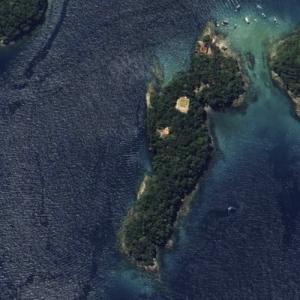
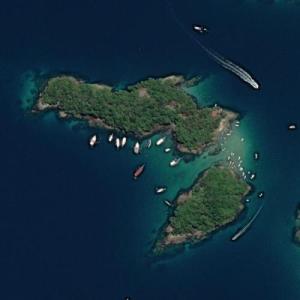
Ilha Comprida is located in Angra dos Reis, along the southern coast of Rio de Janeiro state, Brazil. The area is known for its tropical scenery, clear waters, forested islands and secluded waterfront properties. One of its most notable residences became widely known because of its connection to Brazilian singer Clara Nunes, footballer Richarlison and a legal dispute involving attorney Willer Tomaz, a close friend of senator Flávio Bolsonaro.
The mansion reportedly belonged to Clara Nunes until her death in 1983. In 1986, her widower, songwriter Paulo César Pinheiro, transferred the property’s possession to a company. After passing through several hands, the estate was acquired in 2011 by businessman Antônio Marcos Pereira Silva, who later negotiated its sale to Sport 70, a company associated with Richarlison and his former agent Renato Velasco, in 2020.
The residence is distinguished by its exceptional natural setting and extensive leisure facilities. Reports describe a mansion with 11 suites, a private beach, a swimming pool, a tennis court, a helipad and a waterfall beside the property, creating a secluded retreat surrounded by Atlantic coastal scenery. The combination of direct access to the water and the nearby waterfall made the estate particularly attractive to prospective buyers.
The controversy began after Richarlison’s company acquired rights associated with the property in 2020. According to reporting by *Metrópoles*, Flávio Bolsonaro visited the mansion in July of that year, when the sale to Richarlison’s group was already being negotiated. In January 2021, the senator returned with Willer Tomaz, who subsequently pursued legal action concerning the property’s possession. Flávio later became a witness in the dispute but was not a party to the lawsuit.
The case involved the complicated legal status of coastal land on Brazilian islands. Such areas may belong to the federal government, meaning that rights of occupation and use can be distinct from conventional private ownership. Questions surrounding historical possession records, previous transactions and federal registration became central to the litigation.
In 2022, a court decision transferred possession to interests associated with Tomaz. The dispute continued through the Rio de Janeiro courts and reached the Superior Court of Justice. In 2025, the legal proceedings concluded in favor of WT Administração de Imóveis, the company associated with Tomaz, after the parties linked to Richarlison’s side abandoned further appeals and accepted the outcome. The property therefore remained under the possession of Tomaz’s company.
The controversy returned to public attention in October 2026, when Richarlison publicly alleged that he had lost the property despite substantial financial investment and called for an investigation by Brazil’s Federal Police. He claimed that he had invested approximately R$10 million and had not recovered the money. These statements represent the player’s account of the dispute, rather than a judicial finding that Flávio Bolsonaro took the property. Flávio’s representatives have denied that he purchased, sold, intermediated or otherwise had a direct connection to the property, emphasizing that he was never a party to the legal proceedings.
The reported purchase amounts have also varied. While Richarlison has described his total investment as approximately R$10 million, subsequent reporting has distinguished the initial transaction involving possession rights from additional spending on renovations and improvements. The legal history is therefore as much a story about the complexities of land tenure and possession on Brazil’s coastline as it is about the high-profile figures associated with the mansion.
Today, Ilha Comprida remains notable for its landscape and exclusivity, while the history of this particular residence illustrates how a spectacular coastal property can become the center of a prolonged legal and public controversy.
Ilha Comprida
 Like
Tweet
Share
 Pin
Talk
